16x6 Wet Tap on a Live Water Main in St. Cloud MN
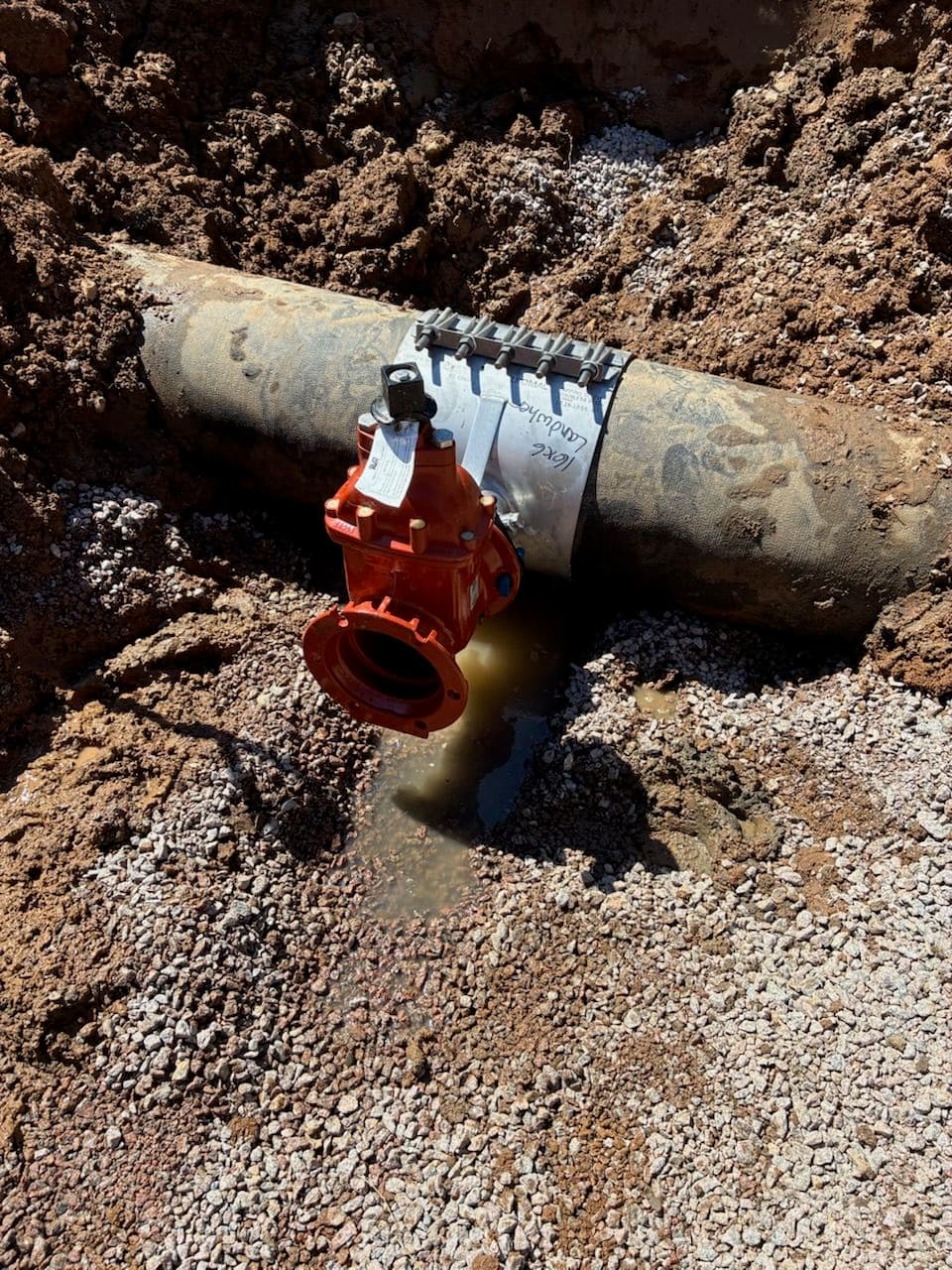
Tapping into a live 16-inch water main without shutting down service - that's exactly what a wet tap is, and it's not a job you hand off to just anyone. This 16x6 wet tap in St. Cloud, MN is a good example of what it takes to add a new branch connection to an existing pressurized main while keeping water flowing the entire time.
Here's what the work actually involves. We start with excavation - getting down to the existing pipe carefully, making sure we have enough room to work safely and install the fitting correctly. From there, a tapping sleeve is bolted around the existing main. That sleeve creates a sealed chamber over the spot where the new tap will be drilled. Then a gate valve - the red one you're seeing here - gets installed on the sleeve before any drilling begins.
Once the valve is in place, a tapping machine is threaded on and used to cut through the pipe wall while everything stays pressurized. The cutter pulls back through the valve, the valve closes, and now you have a live branch connection ready to tie into your new line. The whole point is that nobody downstream loses water pressure during the process.
This particular job was a 16-inch main tapped down to a 6-inch outlet - a pretty common size reduction when you're feeding a lateral line off a large distribution main. The gravel bed, the tight fit of the sleeve, and the clean valve install all matter for long-term performance underground. Done right, this connection will hold for decades.
Wet taps require the right equipment, the right crew, and a solid understanding of how pressurized systems behave. When utilities need to expand or connect without disruption, this is how it gets done.