18x8 Wet Tap Squeezed Between a Water Main and 48" Storm Sewer
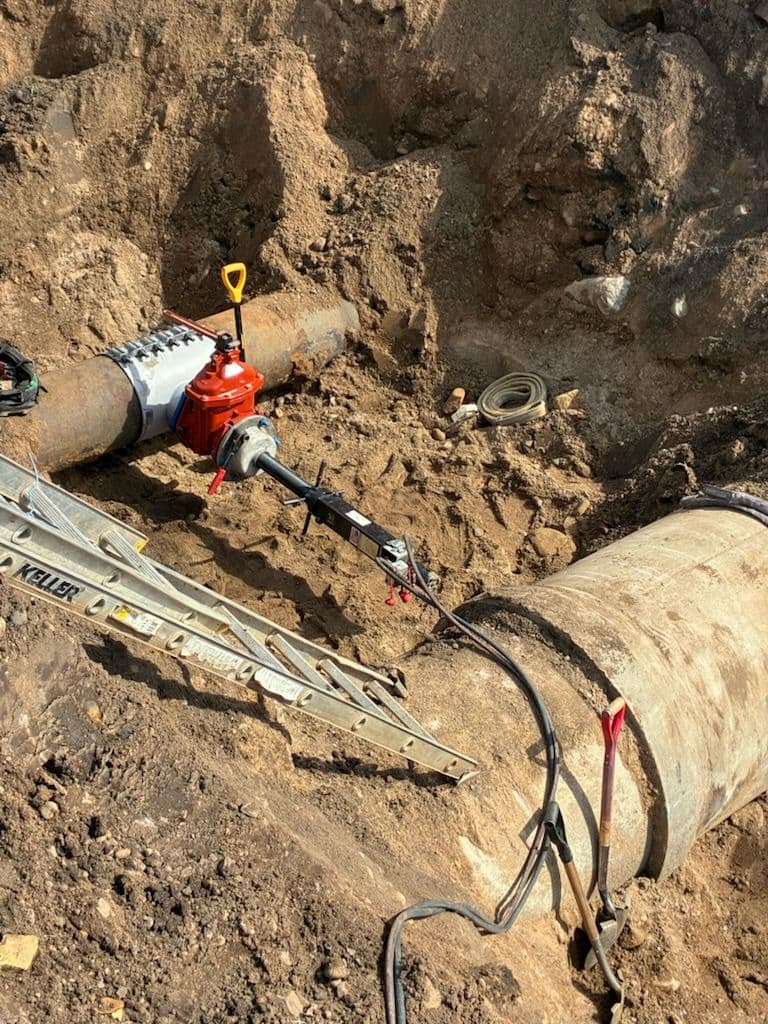
This one tested us. An 18x8 wet tap sounds straightforward until you open up the excavation and realize just how little room you're actually working with. The water main and a 48-inch storm sewer were sitting uncomfortably close together - not enough clearance to set up the tapping machine as a single unit.
So we did what you have to do in situations like this - we took the machine apart and reassembled it in the hole. Piece by piece, configured to fit the space we had. That's not something every crew is comfortable doing, and it's exactly the kind of problem-solving that separates experienced underground contractors from the rest.
Wet taps are already a precision operation. You're making a live connection to a pressurized water main without shutting down service. There's no margin for error on the saddle fit, the valve alignment, or the bore itself. Add a confined workspace into the mix and every step requires more thought and more patience.
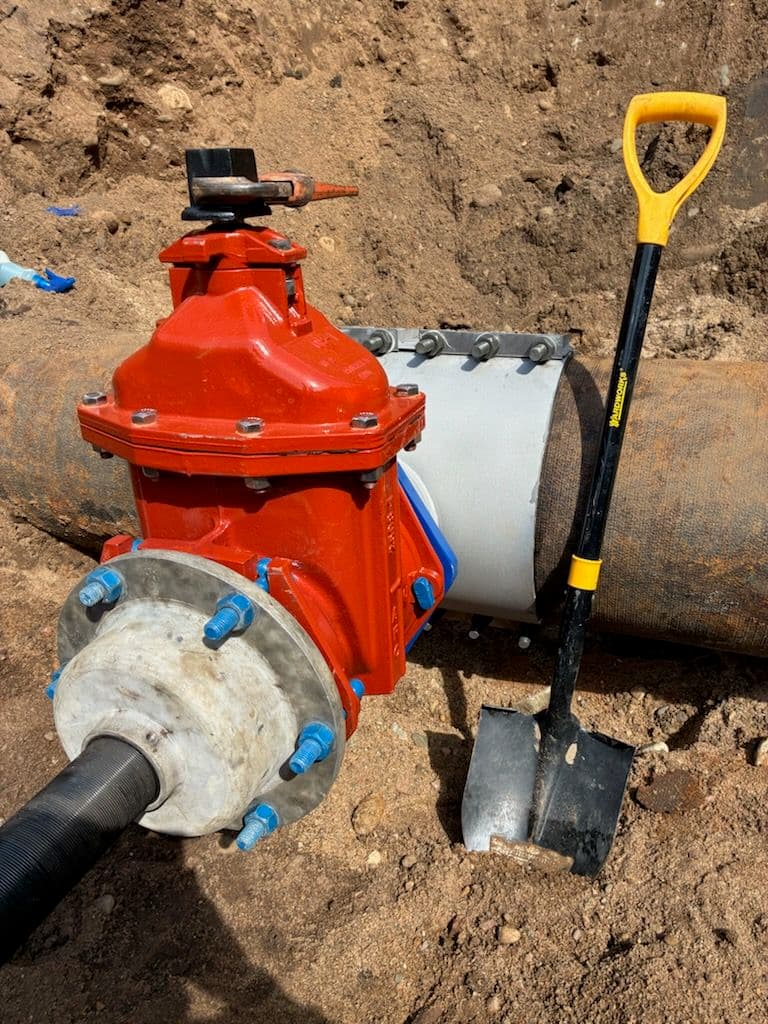
The finished connection - a properly torqued saddle, a solid gate valve, and a clean tap - is what you get when the prep work is done right. No shortcuts, no guessing. Underground work like this lives and dies on planning before anyone picks up a tool.
We handle wet taps and hot taps of all sizes, including the ones that don't fit the textbook setup. If you've got a connection that needs to happen without service interruption, or a site with constraints that make the job complicated, that's exactly the kind of work we do.