Custom 6.75-Inch Core Drilling Job in Bloomington
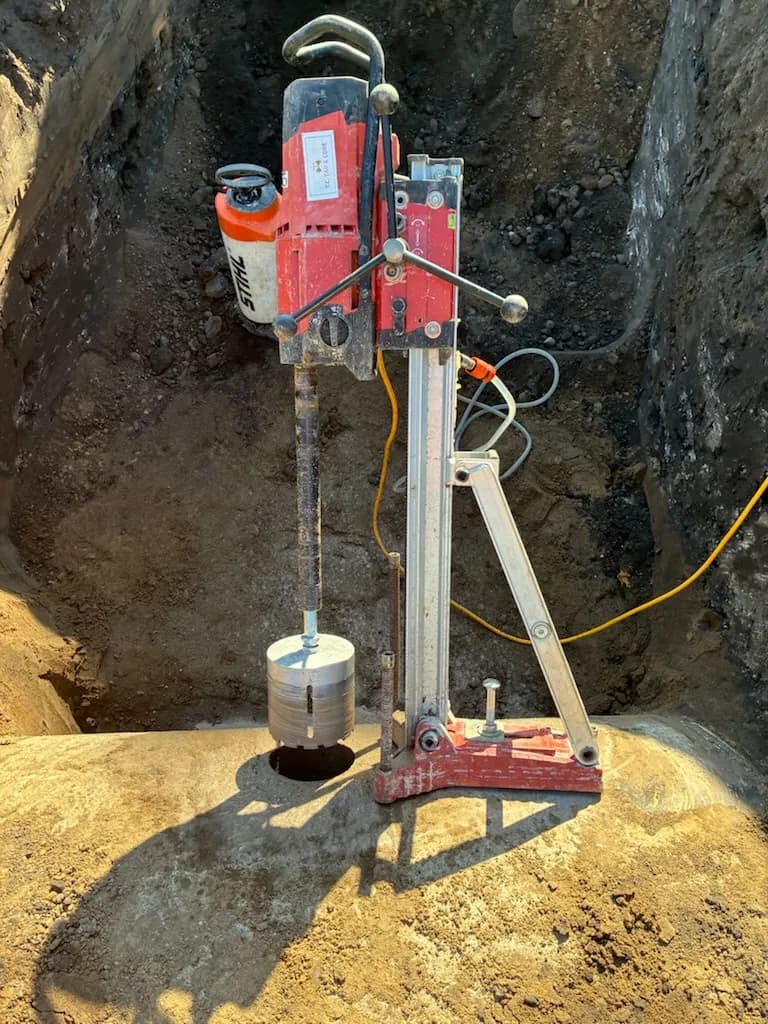
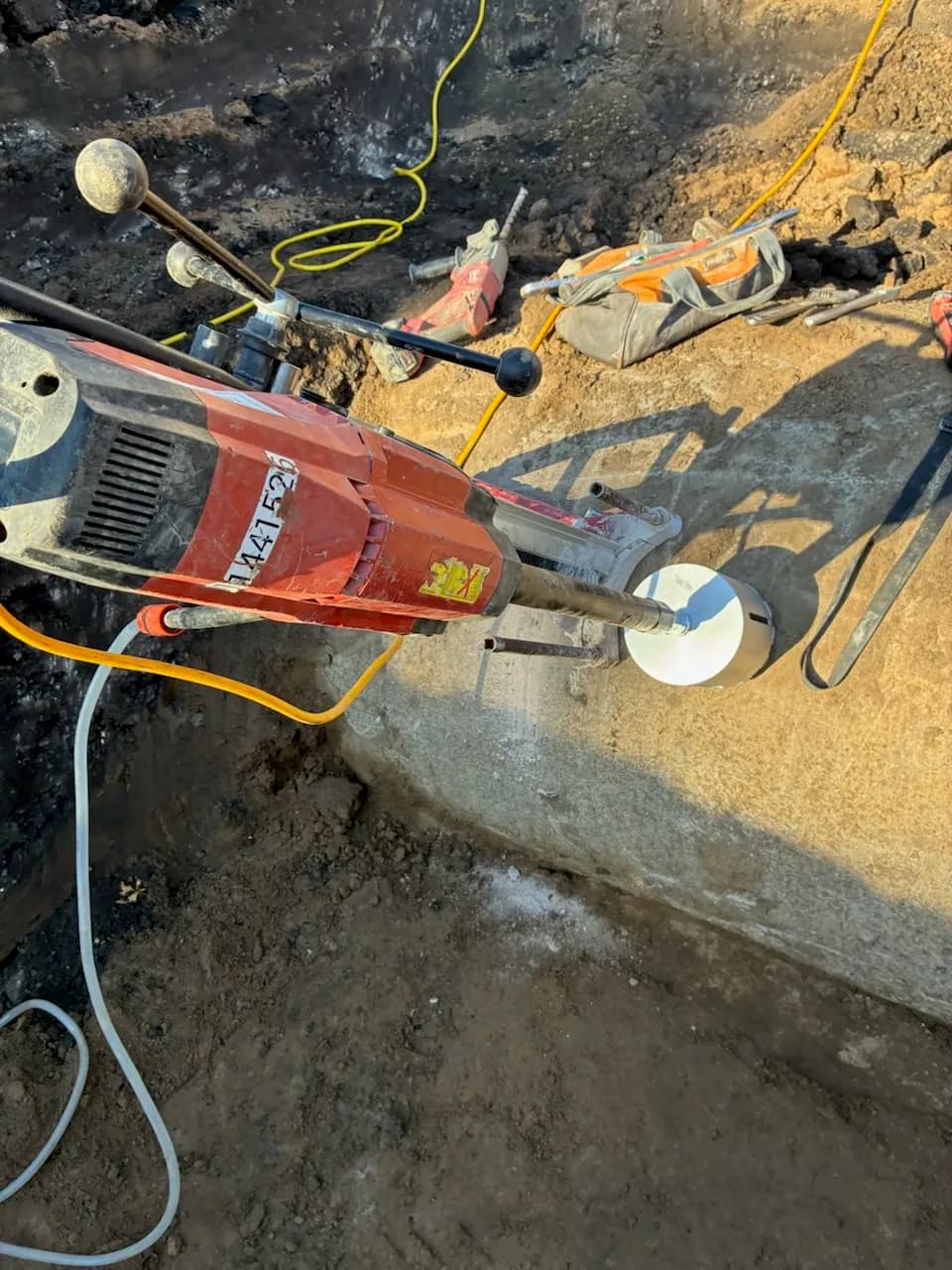
Not every job fits a standard drill bit. This Bloomington job is a good example of that - the setup called for a special-order 6.75-inch bit, which isn't something you'd find sitting on the shelf at most shops. When the specs don't match off-the-shelf equipment, you either find someone who can source the right tooling or you settle for a workaround. We don't do workarounds.
Here's what we were working with - a confined excavation with a concrete surface that needed a precisely sized penetration. The drill rig gets anchored in tight, the bit is positioned, and then it's just a matter of patience and keeping steady pressure through the cut. Concrete like this doesn't care how much you're in a hurry.
That's really the thing about specialty core drilling - the technical side matters just as much as the physical effort. Knowing which bit to order, how to stabilize the rig in a cramped space, and how to manage the cut without damaging the surrounding material - that's the kind of knowledge that only comes from doing this work repeatedly.
Some contractors will tell you a job like this isn't worth the trouble. We'd rather spec it out correctly, source the right bit, and get it done clean. The hole ends up exactly where it needs to be, the right size, with clean edges. That's what the next trade on the job needs to do their work right.
Core drilling gets overlooked as a specialty - people assume any hole in concrete is the same as any other. It's not. Diameter, depth, location, material thickness - all of it factors into how the job gets approached. When those variables get unusual, experience and the right equipment are what make the difference between a job done right and one that causes headaches down the line.