Underground Chilled Water Line Hot Tap at University of Michigan
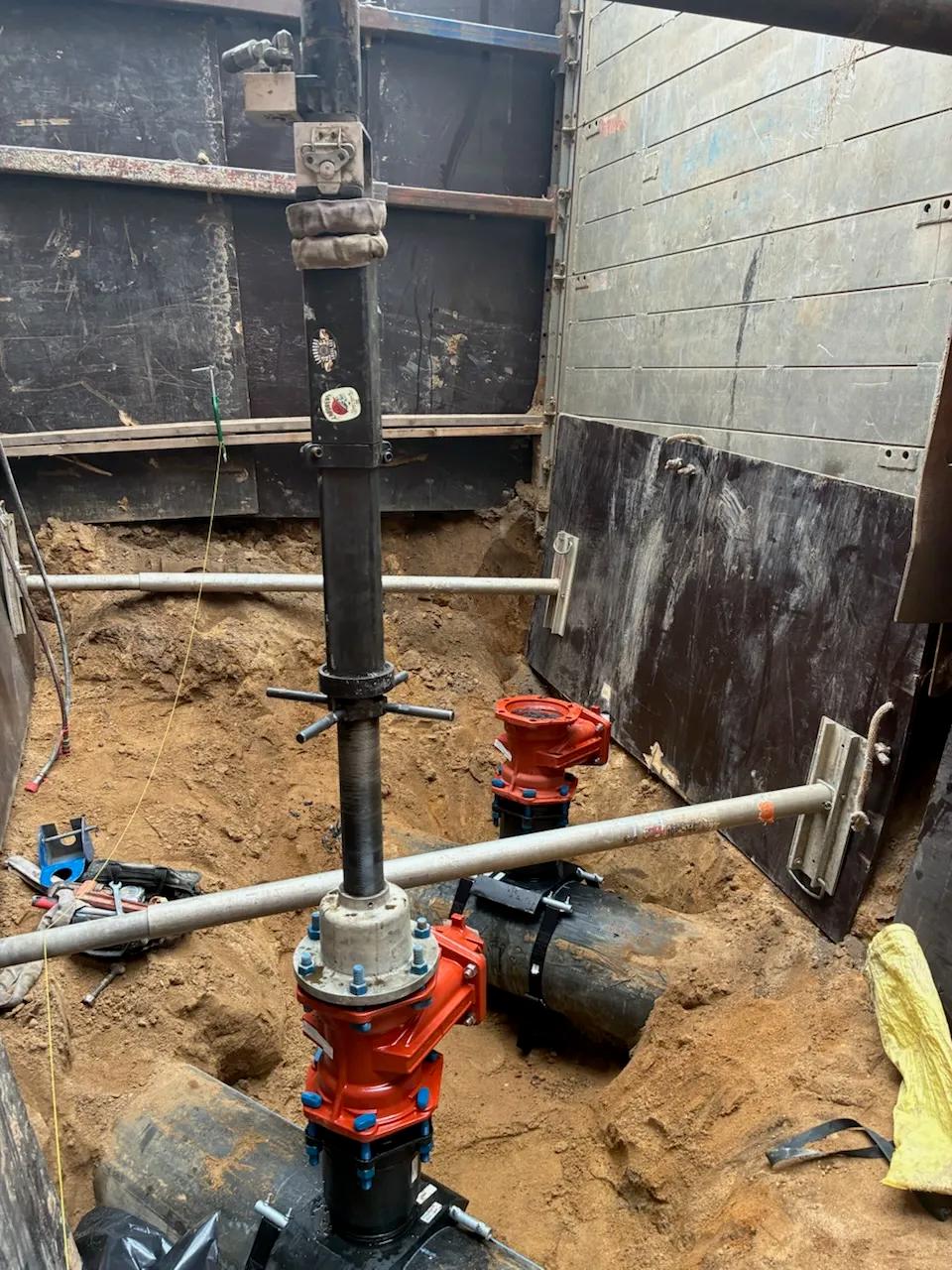
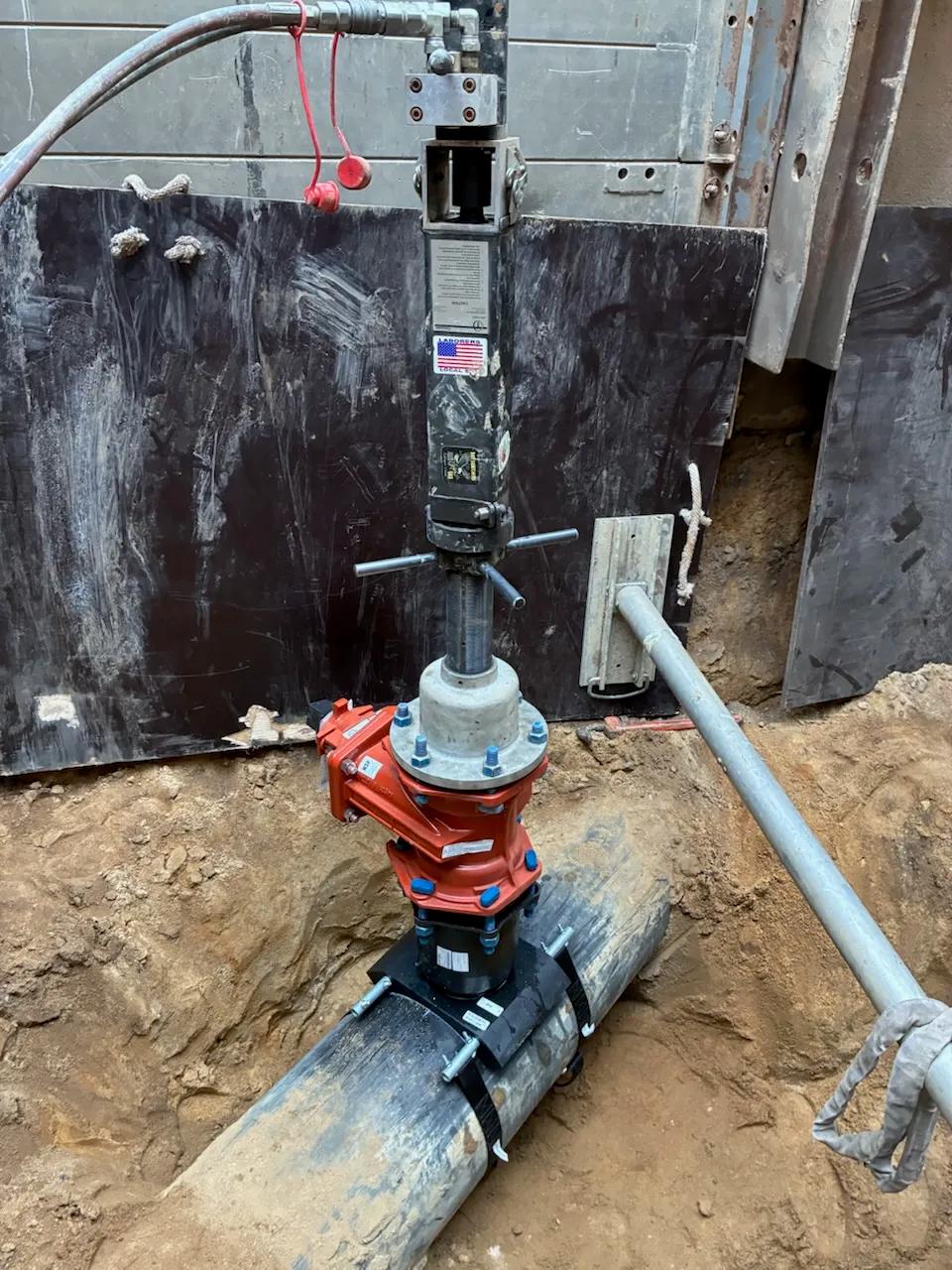
Chilled water systems are the backbone of campus cooling - and when a university needs to expand or connect to that system, shutting down the entire line just isn't an option. That's exactly the kind of situation where a hot tap comes in. We were brought in to perform a wet tap on an existing chilled water main at the University of Michigan, keeping the system live and pressurized the whole time.
Here's what makes this kind of work demanding. You're down in a shored excavation, working with tight tolerances on a pressurized line, and there's zero room for error. The trench shoring panels you see surrounding the work area are there to keep the dig safe and stable - that's not optional on a job like this, it's just how professional underground work gets done.
The red tapping saddles and gate valves bolted to the black HDPE main are the connection points we installed before drilling into the live pipe. That sequence matters a lot. Everything has to be pressure-tight before the drill ever touches the pipe wall, because once you're in, you're in. No second chances on a pressurized chilled water system serving an entire campus.
A job like this one at U of M is a good example of why hot tapping exists. Buildings stay cool, students and staff stay comfortable, and the system never goes offline. No disruption to campus operations, no emergency shutdowns - just clean, precise work below the surface that most people will never see but everyone benefits from.
Underground utility work at this level takes more than the right equipment. It takes a crew that understands the process from start to finish and has done it enough times to handle whatever the ground throws at them. That's what we brought to this one.