Underground Filtration Pond Keeps This Tight Building Site Moving
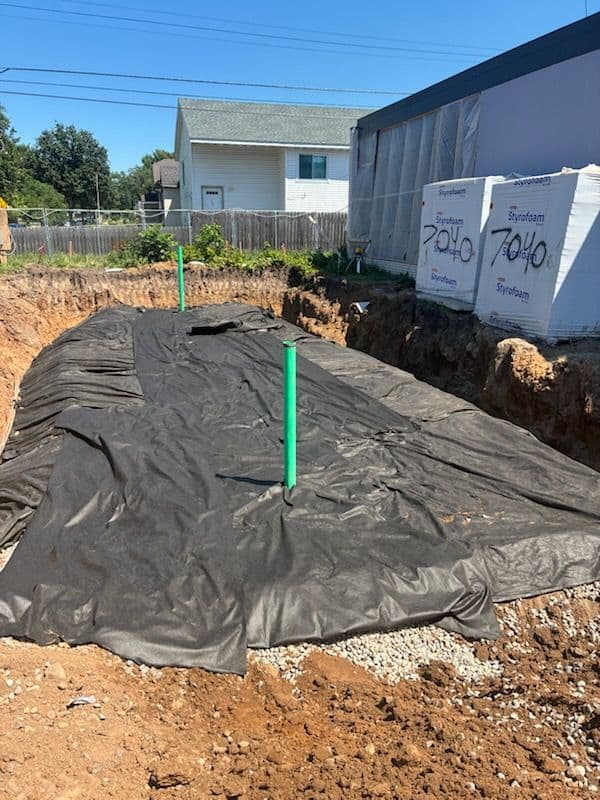
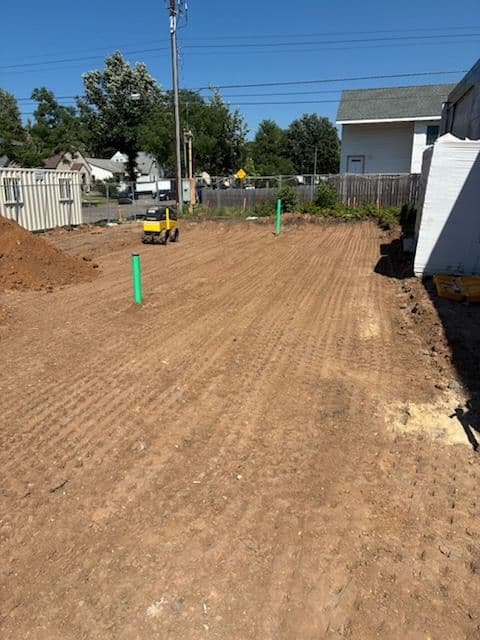
On a tight building site, every square foot matters. You can't afford to give up usable land to a surface retention pond - but you still have to manage runoff. That's exactly the problem an underground filtration pond solves, and it's one of the more satisfying installs we get to do.
Here's what we were working with - a confined site, a building under construction right next to the excavation, and neighbors close on all sides. The system goes in below grade, so once it's buried and the site is graded back out, that surface space is completely freed up. No visible pond. No fencing around a water feature. Just clean, usable ground above and a fully functional drainage system working underneath.
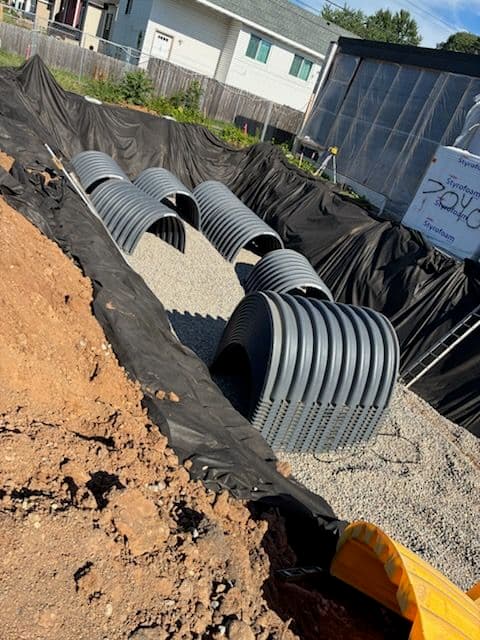
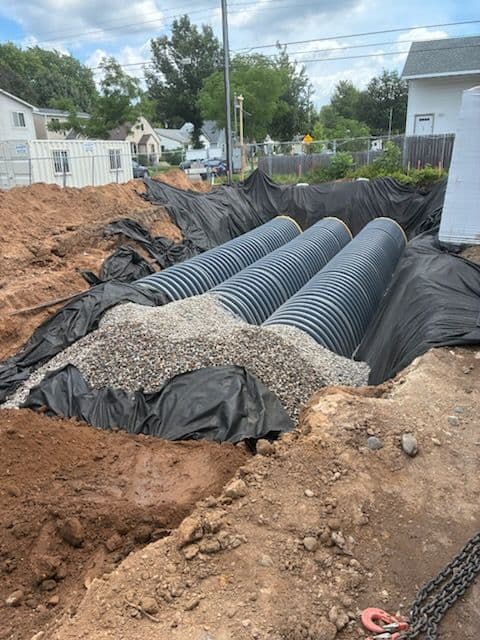
The way it works is pretty straightforward. Large-diameter corrugated pipes are set into a gravel bed and wrapped in heavy geotextile fabric. That fabric acts as a filter barrier - it lets water move through while keeping soil and fine particles from migrating in and clogging the system over time. Stormwater enters the chambers, gets held, and then slowly infiltrates down into the surrounding soil. It keeps runoff off the surface and out of the street during rain events.
What makes this type of install tricky is the coordination involved. The excavation has to be sized right, the gravel bed has to be set at the correct depth, and the pipe layout has to account for how water will actually flow through the system. Get any of that wrong and the system underperforms - or fails inspection. Our crew knows how to sequence this work so it goes in right the first time.
Underground stormwater systems like this are becoming more common on infill and urban construction sites where surface space is limited and runoff regulations are strict. If you're working on a site that needs a drainage solution that doesn't eat into your footprint, this is worth a serious look.